O: F REX CASTELLE mintmark beneath castle "S" for Sevilla
R: ET LEGIONIS, lion adv l.
Bi. Pepion, 19 mm, 0.85 g, Sevilla mint
Cayon 1224
ex: PNC Collection
20200412
20200401
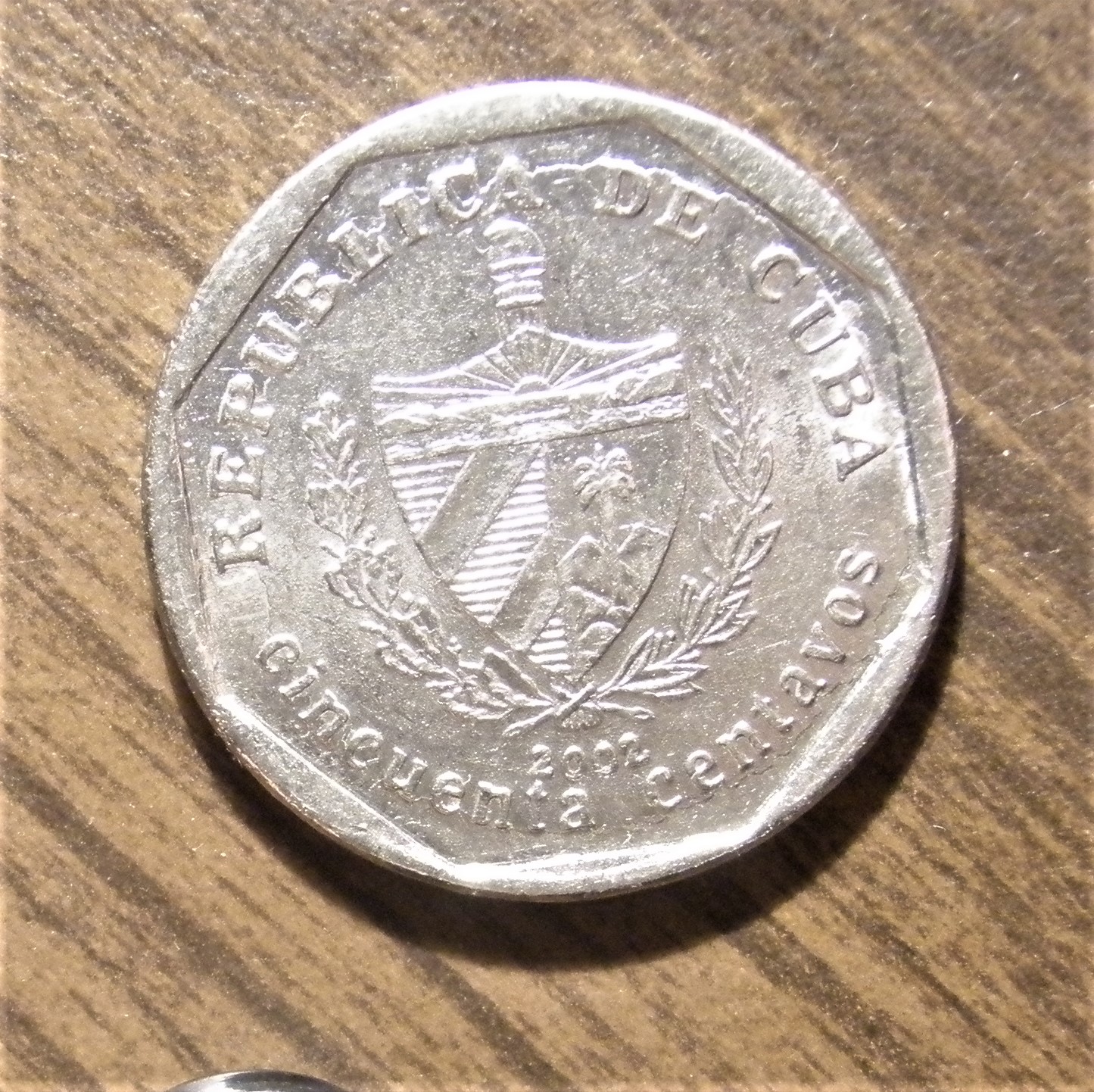
Cuba 21st Century Peso Convertible Series Coins
KM #575.2 2017, 5 centavos, Nickel-plated steel 18 mm 2.65g
KM# 576.2, 2013, 10 centavos 3.94 g
KM# 577.2, 2018, 25 centavos, 5.7 g
KM# 578.1, 2002, 50 centavos, 25 mm 7.5 g
My thanks to MBK for bringing these samples back from a recent trip to Cuba.
20200322
ROMAN CLIENT STATES; Thrace; Rhoimetalkes II & Augustus BCE 11-CE 12
AE 19 mm, 4.1 g
RPC 1718
Stancomb 908, plate 42.
O: KAIΣAPOΣ ΣEBAΣTOY, bare hd of Augustus r.
R: BAΣIΛEΩΣ POIMHTAΛKOY, laur hd of Rhoimetalkes r.
Ex: CNG 34 (1995) portion of lot 580.
R: BAΣIΛEΩΣ POIMHTAΛKOY, laur hd of Rhoimetalkes r.
Ex: CNG 34 (1995) portion of lot 580.
20200320
Greek/Seleucid; Demetrius I Soter BCE 162-150
AR
Tetradrachm; 26 mm, 16.52 g, 10h, Antioch on the Persian Gulf
SC 1707.1
(R2+)
O: Diad. Hd
r, within fillet border
R: Apollo
Delphios testing arrow in r hand resting left hand on grounded bow with two
pellets on grip while std on omphalos. Monograms outer left and right. BAΣIΛEΩΣ on r,
ΔHMHTPIOY on l.
Ex: Brad Bowlin, MS
20200219
GREEK/Seleucid; Antiochos IV Epiphanes BCE 175-164; four examples from Seleucia on Tigris
SC 1510
O: rad head of Antiochos r behind hd A/X denomination
R: goddess with polos std l, on high backed throne, holding Nike and sometimes scepter, bird stg l at feet, dotted border, ΒΑΣΙΛΕΩΣ on r and ANTIOXOY on l.
Note: the bird on the reverse was thought to be an Ibis but SC notes that LeRider commented that on the best preserved specimens it was thought to be an eagle.
R: goddess with polos std l, on high backed throne, holding Nike and sometimes scepter, bird stg l at feet, dotted border, ΒΑΣΙΛΕΩΣ on r and ANTIOXOY on l.
AE 16 mm Chalkous, 3.38 g, 1h
AE 16 mm Chalkous, 4.07g, 1h
AE 16 mm Chalkous, 4.51g, 1h
AE 15 mm Chalkous, 4.69g, 1h
GREEK/Seleucid; Antiochos VII Sidetes BCE 138-129
AE 20 mm, 5.84 g, 12h, Seleucia on the Tigris mint, Late Summer BCE 130-Autumn BCE 129
SC 2129.1 or 2 (R2)
O: Diad. hd of Antiochos VII r, dotted border
R: barely legible inscriptions BAΣIΛΕΩΣ ANTIOXOY in two lines on r, and ΕYEPΓETOY on l.
Nike adv l holding wreath before her face and palm over shoulder, ΓΠP (BCE 130/129) in ex., but illegible on this example.
As is noted in SC on page. 394 of part II vol. 1, "Antiochus recaptured Babylonia from Phraates II in the late Summer of 130. He held Babylon for a bit more than a year, meanwhile extending his control over Mesopotamia and Elymais and challenging the Parthians in Media. In the autumn of 129, before 5 November, the Parthians attacked and defeated the Seleucid army in Media, and Antiochus perished in battle."
Examples of this coinage and a silver Tetradrachm and drachm represent the last Seleucid coinage from this mint. Parthian control was extended over the mint operations and continued thereafter to issue Tetradrachms for that regime.
SC 2129.1 or 2 (R2)
O: Diad. hd of Antiochos VII r, dotted border
R: barely legible inscriptions BAΣIΛΕΩΣ ANTIOXOY in two lines on r, and ΕYEPΓETOY on l.
Nike adv l holding wreath before her face and palm over shoulder, ΓΠP (BCE 130/129) in ex., but illegible on this example.
As is noted in SC on page. 394 of part II vol. 1, "Antiochus recaptured Babylonia from Phraates II in the late Summer of 130. He held Babylon for a bit more than a year, meanwhile extending his control over Mesopotamia and Elymais and challenging the Parthians in Media. In the autumn of 129, before 5 November, the Parthians attacked and defeated the Seleucid army in Media, and Antiochus perished in battle."
Examples of this coinage and a silver Tetradrachm and drachm represent the last Seleucid coinage from this mint. Parthian control was extended over the mint operations and continued thereafter to issue Tetradrachms for that regime.
Triton XIII, Lot: 543 (2010)
Sellwood 17.1
A Tetradrachm of Phraates II minted at Seleucia after the death of Antiochos VII and the Parthian seizure of the mint. The control utilized is the same as that found on the Tetradrachm of Antiochos VII minted in the prior year (cf SC 2127). This Tetradrachm is thought to have been issued around BCE 129 in the aftermath of the war between the Seleucids and Parthians.
20200202
Cilician Armenia: Hetoum I Հեթում Ա CE 1226-1270
AE Tank, 30mm, 7.85 g, Sis mint
Nercessian 353 v
O: ՀԵԹՈՒՄ ԹԱԳԱՒՈՐ ՀԱՅՈՑ
King std on wide bench holding a globus cruciger and fleur de lys, Legend in Armenian reads "Hetoum Takavor Hayots" or "Hetoum King of the Armenians".
R: ՇԻՆԵԱԼ Ի ՔԱՂԱՔՆ Ի ՍԻՍ
Cross Potent with lines in each quadrant, Legend in Armenian reads "Shineal I kaghakn I Sis" or "Struck in the city of Sis".
20200104
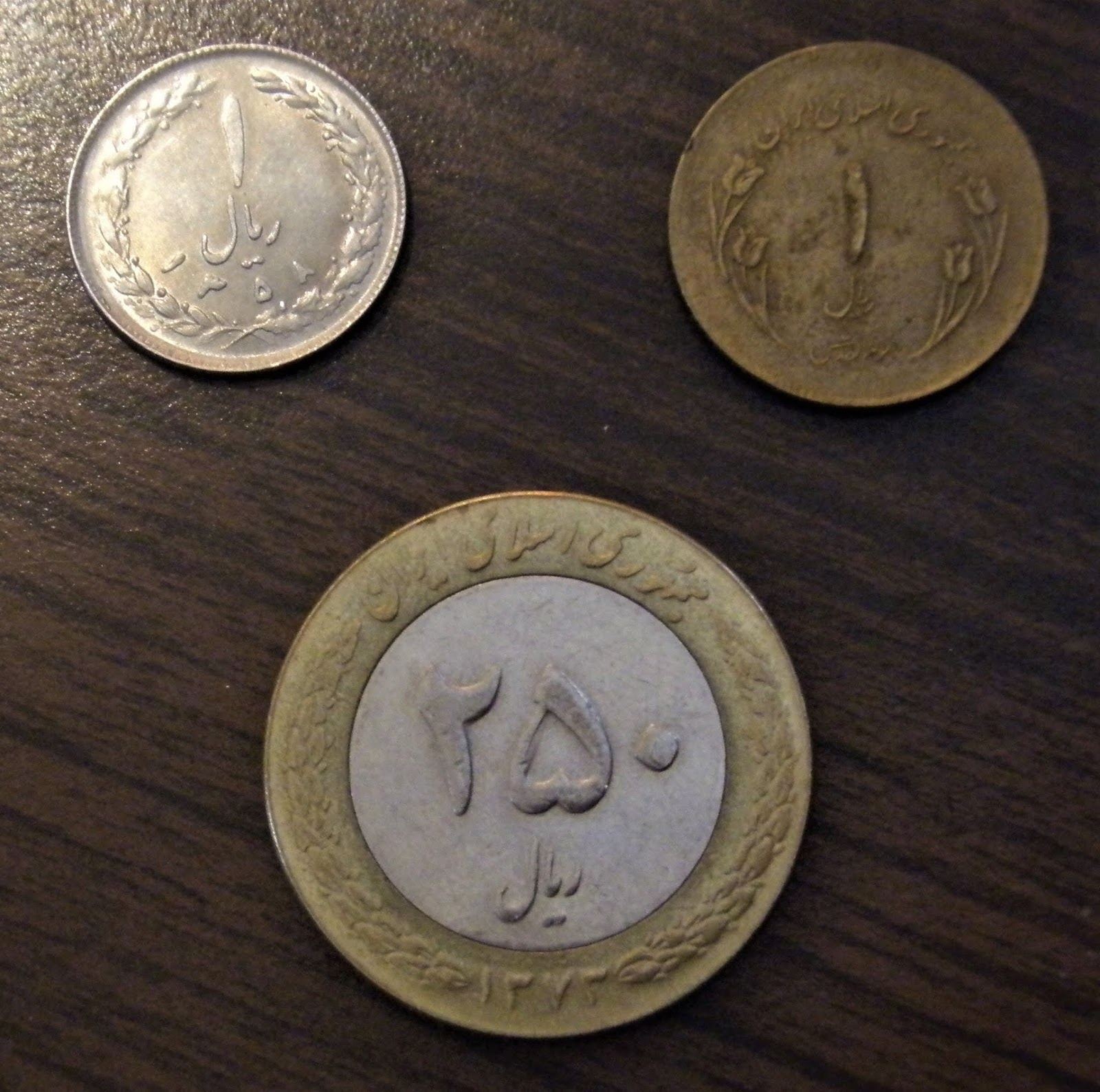
In the news; IRAN (1979-date)
Islamic Republic of Iran (1979-date)
Top Left: Epigraphic 1 Rial, KM #1232 (CN) 18 mm, 1.73 g. (this specimen, others are as much as 1.8)
O: جمهوري
اسلامي ايران
ﯾﮏ ريال
(Islamic Republic of Iran/One Rial)R: denomination in a numeral and Rial written out and the date (1979)
۱۳۵۸
Top Right: 1 Rial, Jerusalem (Quds)Day/Ramadan 1400 issue 1980, KM #1245 (bronze clad steel) 20 mm, 2.49 g.
O: Dome of the Rock from Jerusalem, to the right of the dome the inscription is for "International Quds Day" and to the left the inscription reads "Ramadan Mubarak 1400",
۱۳۵۹
R: denomination above Rial, Islamic Republic of Iran above denomination and "Yawmal-Quds" written in Arabic beneath (Jerusalem Day) with tulips bordering either side. Bottom: 250 Rial, 1994 KM #1262 (bi-metallic CN center in brass ring) 28 mm, 10.7 g
O: anepigraphic depiction of stylized flower in wreath.
R: Islamic Republic of Iran above denomination and date ١٣٧٣ below.
The top two examples were obtained forty years ago from Iranian friends who acquired them on trips home in the years immediately following the 1979 Revolution. The most recent example was collected from a batch of world coins recently purchased. It was the first Iranian coin acquired this way in many years. As of the present time (4 Jan 2020) 42,029.96 Iranian Rials equal 1 USD. To understand the equivalent values of these coins when issued, in mid-1979 1 USD was equal to 121 Rials the following year it was 217 and in 1993 it was 1,610. (these are black market exchange rates from an article in Iranian Economic Review Vol 10 #14 (Fall 2005) entitled "History of the Rial and Foreign Exchange Policy in Iran" by Mohsen Bahmani-Oskooee.
20191229
1920-2020 Lovely coins from a century ago
Italy, 1920-R, Vittorio Emanuele III 1900-1946
5 Centesimi, minted from 1919-1937, KM 59, reverse design reminiscent
of the ancient designs on coins of Metapontum, mintage in 1920 was 33,372,000
coin specs 3.26 g and 19.8 mm.
10 Centesimi, minted from 1919-1937, KM 60, mintage in 1920
was 37,995,000 coin specs 5.34 g and 23 mm.
20 Centesimi, minted from 1908-1935, KM 44, mintage in 1920
was 27,284,000 coin specs 3.97 g and 21.5 mm.
20191002
ISLAMIC/Governors of Tabaristan; Sulayman b. Musa CE 787-789
AR
Hemidrachm, 2.13 g 23mm, Tabaristan mint PYE 137/CE 788-789
Album 65 (S)
O: Sassanian
style bust r with face replaced by rhomboid bearing the Arabic word بخ, Arabic
marginal legend سليمن
R: Fire
altar flanked by attendants, Tabaristan in Pahlavi on r and date PYE 137 on l.
ISLAMIC/ Governors of Tabaristan; Jarir CE 786-788
AR
Hemidrachm, 1.94 g 24 mm, Tabaristan mint, PYE 136/CE 787-788
Album 63 (R)
O: Sassanian
style bust r with Arabic marginal legend جرير
R: Fire altar
flanked by attendants, Tabaristan in Pahlavi on r and date on l
20190928
ISLAMIC/Seljuq of Rum; Kayka’us II, Qilij Arslan IV and Kayqubad II CE 1249-1259
AR Dirham;
23 mm, 2.99 g, Qonya mint, AH 650/CE 1252-1253
Album 1227
O:
لا اله الا الله
محمد رسول الله
المستعصم بالله
اميرالمؤ
منين ضرب في سنة
خمسين
وستماءة بقونية
R:
السلاطين الاعاظم
عزالدنيا والدين كيكاوس
و ركن الدنيا والدين قلج ارسلان
وعلاالدنيا والدين
كيقوباد
ابن كيخشرو برحن
امير المؤمنين
ISLAMIC/Seljuqs of Rum; Kayka’us II, Qilij Arslan IV and Kayqubad II CE 1249-1259
AR Dirham;
23 mm, 2.99 g, Sivas mint
Album 1227
O: لا اله الا الله
محمد رسول الله
المستعصم بالله
اميرالمؤ
منين ضرب في سنة
ستماءة بسواس-----
R:
السلاطين الاعاظم
عزالدنيا والدين كيكاوس
و ركن الدنيا والدين قلج ارسلان
وعلاالدنيا والدين كيقوباد
ابن كيخشرو برحن امير المؤمنين
20190924
ISLAMIC/ Seljuqs of Rum; Kayka’us II عز الدين كيكاوس بن كيخسرو AH 643-647/CE 1245-1249
AR Dirham,
22 mm, 2.97 g, Qonya mint AH 647/CE 1249
Album 1223.1
O: Outer:
ضرب هذا[ \ الدرهم
\ بقو\ نية
Inner:
السلطان الاعظم
ظل الله في العالم
عزالدنيا و الدين
كيكاوس بن كيخشرو
R: Outer: (in Diwani script)
سنة \ سبع و\
اربعين و\ ستماءة
Inner:
لا اله الا الله
محمد رسول الله
الامام المستعصم
بالله اميرالمؤمنين
20190906
GREEK/CAPPADOCIA; Ariarathes IV Eusebes BCE 220-163
AR Drachm 4.03 g, 20 mm, 1h, RY 33=BCE 188/7
Simonetta 15
BMC 32,10
O: diad bust of Ariarathes IV r.
R: Athena stg l. holding Nike, BAΣIΛEΩΣ/APIAPAϴOY/EYΣEBOYΣ, H in far left field
Δ in far right, monogram inner left beneath Nike. ГΛ in ex.
Simonetta writes on pp. 21-22 that the coins of Ariarathes IV "...issued in the 33rd year are most numerous. To account for the fact of so many drachms having been issued in the 33rd year of his reign, Reinach pointed out that in 188 BC Ariarathes was compelled to hand over to the Romans a very large amount of money, as punishment for the help he had given Antiochus. Cn. Manlius Vulso had, in fact, imposed upon him a tribute of 600 talents (1 talent=6,000 drachms) that came, eventually , to be halved through the intercession of his son-in-law Eumenes, king of Pergamum, an ally of the Romans."
In a note Simonetta continues "It might be thought that this enormous sum (for the times and for a small kingdom) of 1,800,000 drachms (600 talents x 6,000=3,600,000, reduced by half after the intercession of the King of Pergamum) could not have been paid over in coined money, but in bullion; however we are lend to believe that the greater part was handed over in coin, because of the very large number of drachms still extant: it suffices to recall that 31 varieties of the drachms of year 33 have been recorded here, and amongst this great diversity at least 77 obverse dies are known (Mørkholm, NC 1969, 26). If we reckon that each obverse die could have struck 10,000 specimens (Sellwood, NC 1963, 229), then, according to our present knowledge, at least 770,000 drachms came from the mint in this year. It is obvious, too, that many dies are not represented on the extant specimens, hence the number of drachms struck must be an even higher figure. There was also a clear advantage to Ariarathes in adopting this method of payment; these drachms are very often a little less in weight than they should be. Multiplying this small difference in weight by hundreds of thousands of examples, the saving becomes considerable."
Simonetta writes on pp. 21-22 that the coins of Ariarathes IV "...issued in the 33rd year are most numerous. To account for the fact of so many drachms having been issued in the 33rd year of his reign, Reinach pointed out that in 188 BC Ariarathes was compelled to hand over to the Romans a very large amount of money, as punishment for the help he had given Antiochus. Cn. Manlius Vulso had, in fact, imposed upon him a tribute of 600 talents (1 talent=6,000 drachms) that came, eventually , to be halved through the intercession of his son-in-law Eumenes, king of Pergamum, an ally of the Romans."
In a note Simonetta continues "It might be thought that this enormous sum (for the times and for a small kingdom) of 1,800,000 drachms (600 talents x 6,000=3,600,000, reduced by half after the intercession of the King of Pergamum) could not have been paid over in coined money, but in bullion; however we are lend to believe that the greater part was handed over in coin, because of the very large number of drachms still extant: it suffices to recall that 31 varieties of the drachms of year 33 have been recorded here, and amongst this great diversity at least 77 obverse dies are known (Mørkholm, NC 1969, 26). If we reckon that each obverse die could have struck 10,000 specimens (Sellwood, NC 1963, 229), then, according to our present knowledge, at least 770,000 drachms came from the mint in this year. It is obvious, too, that many dies are not represented on the extant specimens, hence the number of drachms struck must be an even higher figure. There was also a clear advantage to Ariarathes in adopting this method of payment; these drachms are very often a little less in weight than they should be. Multiplying this small difference in weight by hundreds of thousands of examples, the saving becomes considerable."
20190821
ROMAN/ Maximianus CE 286-310
RCV 13237
O: laur cuir bust r, IMP C MAXIMIANVS PF AVG
R: Genius stg l, holding patera and cornucopia, GENIO
POPV-LI ROMANI
EX: Triskeles Auctions 23 (6 April 2018) lot 590
ROMAN/ Maxentius CE 306-312
AE Follis,
24x26mm, 5.9 g, Ostia mint, CE 309-312
O: IMP C
MAXENTIVS P F AVG; laureate head right.
R: AETERNITAS
AVG N; Castor and Pollux standing facing each other, each leaning on sceptre
with outer left arm and holding bridled horse. in ex. MOSTS
The Dioscuri statues at the Campodoglio in Roma in 2024
20190727
BYZANTINE; Justinian CE 527-565
AV Solidus, 4.46 g, 21mm, 6h Constantinople mint c. CE 537-542
SB 139
O: facing portrait in
military garb, DN IVSTINI-ANVS PP AVC
R: Victory holding cross in r and globus cruciger in l hand,
star in lower right field. VICTORI-A AVCCC Г/CONOB in ex.
Ex: Heritage Auction 378 (2-3 June 2005) lot 12107
Ex: Dr. Kurt Peters Collection
Ex: Heritage Auction 378 (2-3 June 2005) lot 12107
Ex: Dr. Kurt Peters Collection
Subscribe to:
Posts (Atom)